
Bench Warrants in Pawnee County
Nebraska's Supreme Court glossary keeps the definition simple: a bench warrant is a judge's order from the bench to arrest a person. What it means for you depends on the underlying case. Traffic, misdemeanor, city, and village ordinance matters in Pawnee County generally stay in County Court. A felony can start there too, at a preliminary hearing, then move up to District Court. A bench warrant is not a new charge. It is process attached to something the court already asked you to do. So ask the clerk what the docket says and what the judge wants next. Not every missed date produces a warrant. And time alone never makes one go away.
Nebraska’s Official Pawnee County Bench-Warrant Definition
That state glossary is the plainest place to start. Pawnee County publishes no separate local bench-warrant code or capias label of its own. Local records lean on the words "bench warrant," "warrant for arrest," and failure-to-appear or nonpayment language.
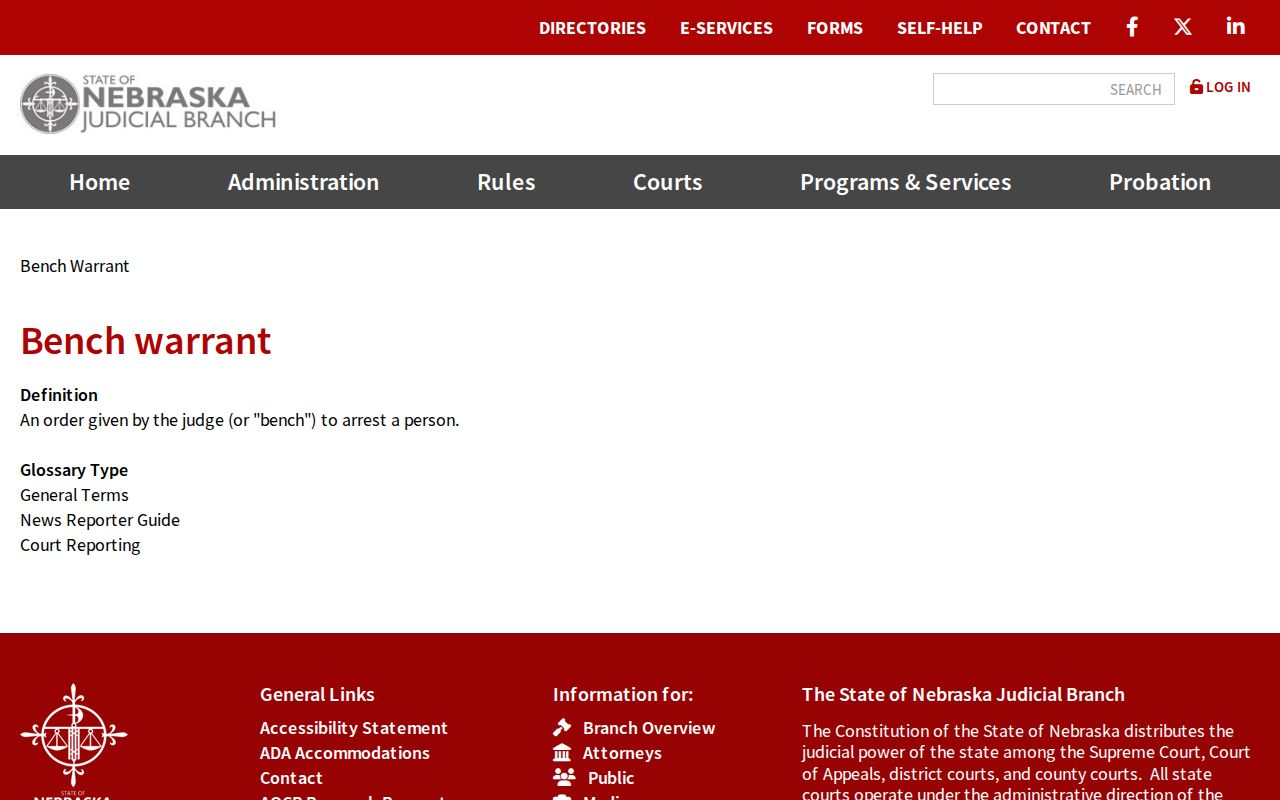
The definition applies to bench warrants generally and does not identify any Pawnee County person or current warrant.
How a Bench Warrant Is Issued
Every case follows its own sequence. A citation or court order creates the obligation first. Miss the appearance or skip the requirement, and the judge may enter process from the bench. The clerk records it. Then the Sheriff or another authorized officer serves or executes it. Recall, though, belongs to the court alone, along with any required appearance. Ordinance questions in Nebraska run through County Court. For a district-level criminal case, call Pawnee District Court directly. The right clerk can walk you through the docket, but keep in mind a public case search never replaces a current status answer from the court.
Why Pawnee County Ordinance Bench Warrants Go to County Court
Nebraska Judicial Branch materials give County Court jurisdiction over city and village ordinances, traffic cases, misdemeanors, and felony preliminary hearings. Pawnee City has ordinance chapters on the books. The city publishes no separate municipal court warrant portal, so the county handles it.
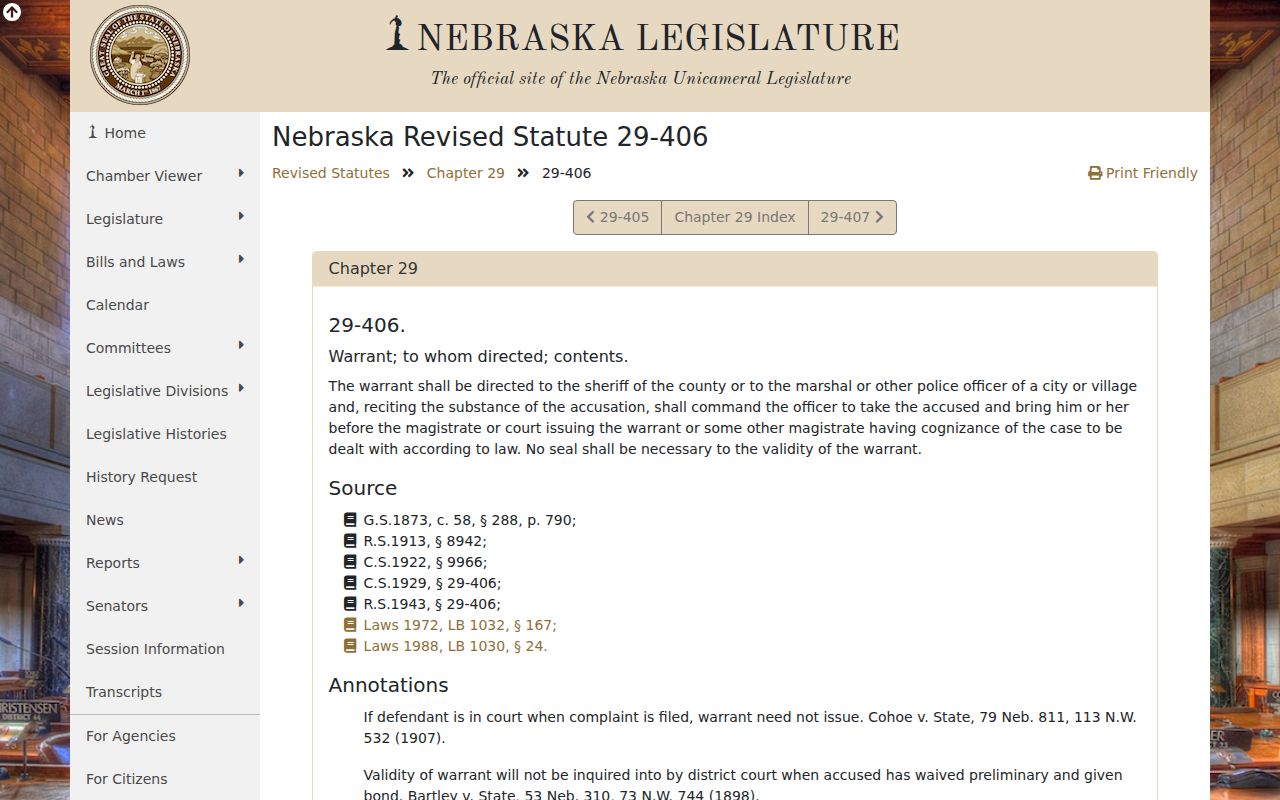
City Hall holds the ordinance text, while Pawnee County Court confirms the case and any warrant status.
Bench Warrant vs Arrest Warrant
Both types can authorize an arrest. What differs is the path and the docket reason behind the label. Treat the table as a plain-language comparison, then ask Pawnee's issuing court for the actual entry.
| Question | Bench warrant | Arrest warrant |
|---|---|---|
| Typical trigger | Missed appearance or failure to comply with a court obligation. | Complaint and reasonable grounds supporting judicial process. |
| Record focus | Existing case event and required court action. | Accusation, warrant contents, and execution. |
| Recall authority | Issuing judge or court. | Issuing judge or court. |
| Local first call | County Court or District Court clerk. | Issuing court, then Sheriff for service questions. |
Which Pawnee County Court Issued It
A traffic citation, misdemeanor, ordinance case, or preliminary-hearing matter most likely runs through Pawnee County Court, at (402) 852-2388. District-level criminal filings go to Pawnee District Court, at (402) 852-2963. The state profile lists Lindsay Kostecka as District Court clerk, though older local materials differ, so confirm by phone.
How to Resolve a Pawnee County Bench Warrant
Orient yourself in JUSTICE first. Then call the issuing court before you travel anywhere in Pawnee County. Ask whether the judge wants a motion, a scheduled appearance, a payment, a bond, or a voluntary surrender. A lawyer can tell you whether a motion to recall or quash fits, and can often arrange the setting for you.
Call first: Pawnee County publishes no walk-in surrender hours, bond window, or standard recall form. Ask the court and Sheriff for current instructions before appearing.
If fines or costs are involved, keep the payment plan separate from the warrant recall. Nebraska's payment service takes no bond online. Hold onto the case number, receipts, clerk confirmation, and any court order.
Pawnee County Bench Warrant Recall, Payment, and Surrender
Recall is one thing: a court act. Payment is another: an action on an eligible balance. Surrender is a third: a custody step. None performs the others automatically. Nebraska traffic guidance warns that a warrant tied to a ticket stays active until the court recalls it, even after you pay. Under section 29-2412, a person arrested in certain nonpayment custody circumstances gets a financial-ability hearing on the first regular court date after arrest. The statute sets no local bond amount and promises no result. Ask the Pawnee County court what evidence to bring and what proof you will receive.
Note: The word “cleared” should be backed by a current court entry, not a private database status.
Pawnee County Sheriff Bench-Warrant Role
The Pawnee County Sheriff serves, executes, and returns process under local legal-process duties. Whether a judge recalls a bench warrant is never the Sheriff's call. The official Sheriff page lists (402) 852-2969 and the courthouse at 625 6th Street in Pawnee City.
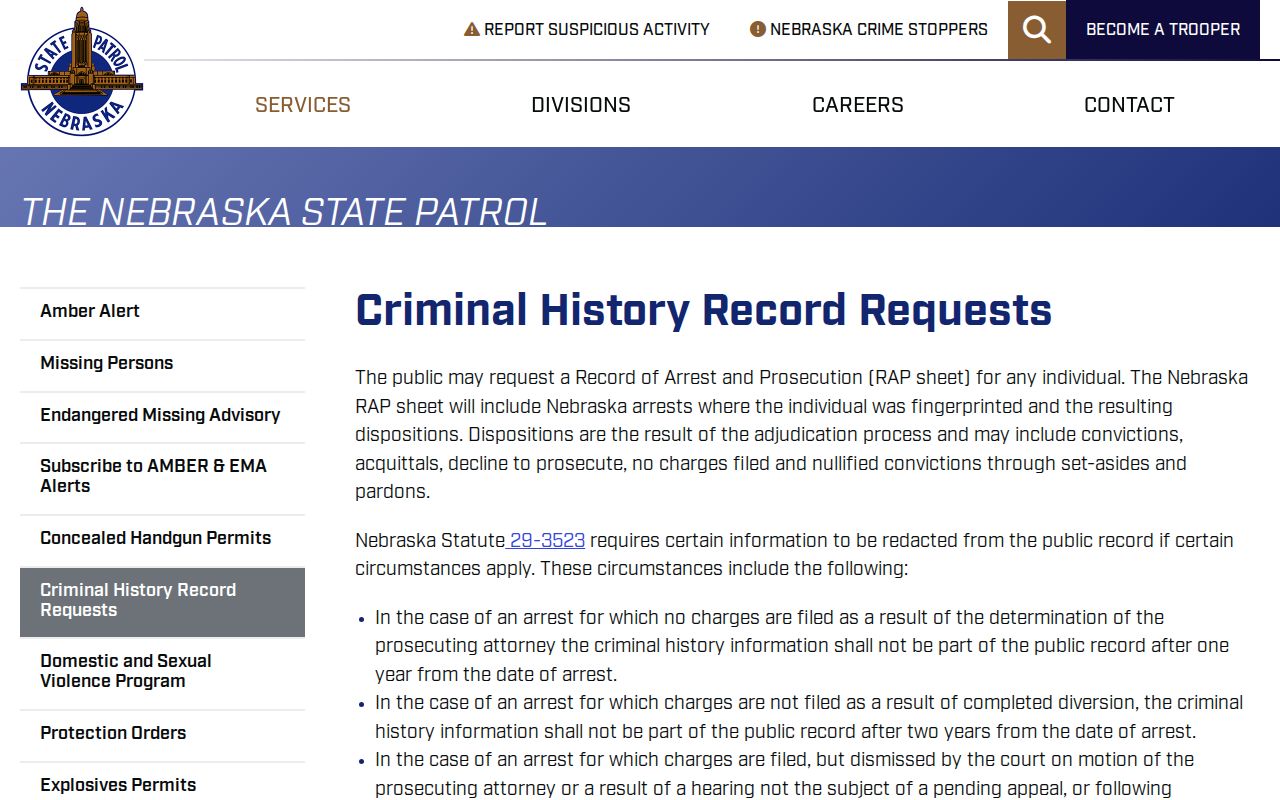
The Sheriff's official page covers channels and contacts, not any named person's warrant. Call that office for logistics, and the issuing court for recall.
Pawnee County Bench-Warrant Recall Confirmation
Ask the clerk when the recall was entered and how to get a copy or docket confirmation. Keep everything together: case number, date, payment receipt, order, bond paperwork, any other proof. If DMV compliance rides on a traffic matter, ask what document the court sends and allow posting time. Do not trust a name vanishing from a search result. JUSTICE can lag behind the docket. No public Pawnee County list serves as a final check. A clerk's current answer is the safer record.
Pawnee County Bench-Warrant Nonpayment Hearing
Section 29-2412 gives a person one regular court date after an arrest for failure to pay fines or costs, or for failing to appear on a payment order. At that hearing, the person can lay out income, assets, debts, and anything else bearing on ability to pay. The court then weighs what the person can afford. It also weighs the statutory alternatives. None of this guarantees a waiver or release. Treat it as a reason to ask counsel or the court what fits the case. Pawnee County publishes no bond schedule, payment window, or after-hours surrender route.